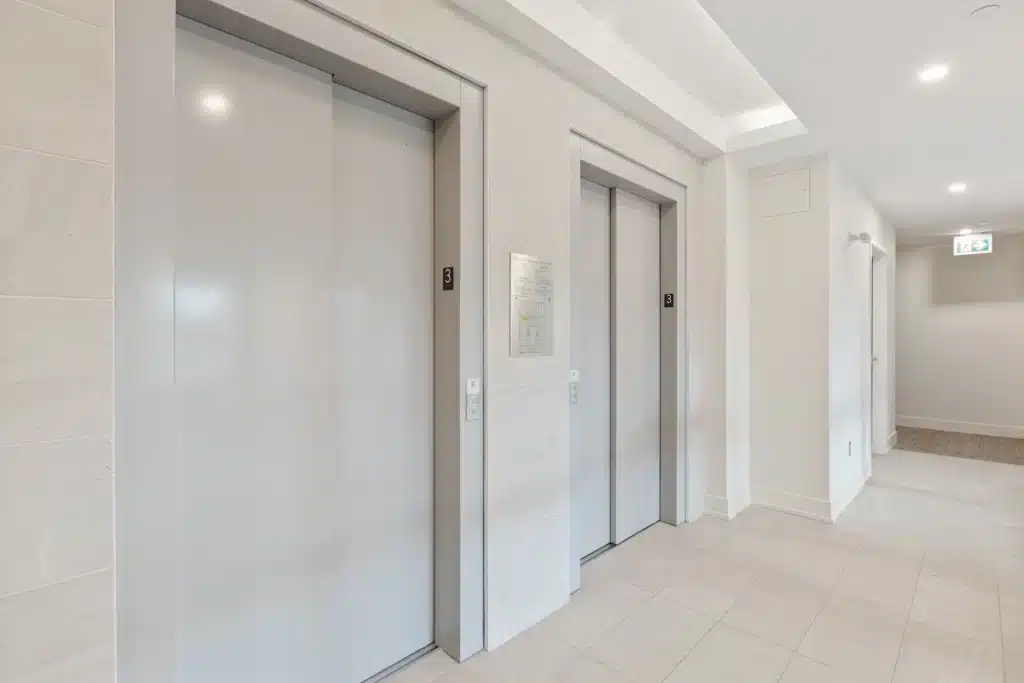
Different residential developments require different lift layouts and building regulations. In order to provide the greatest solution for your building, residents, and housing managers, multi-storey residential properties may need numerous platform and passenger-type elevators. There are a number of factors to take into mind.
According to the National Office of Statistics, In 2021, 21.7% (5.4 million) of households were in a flat, maisonette or apartment, up from 21.0% (4.9 million) in 2011. That’s a lot of people in need of passenger lifts!
In large and high-rise buildings, vertical transport options like lifts are absolute essentials for getting people – plus their gear and visitors – from floor to floor with no fuss. Loads of people are constantly popping in and out of multi-story housing complexes to get to their place, or others.
Just being familiar with the laws and industry guidelines covering lift needs, building codes and fire safety rules is crucial whether you’re starting from scratch or renovating an old building. So let’s take a look at when you might need a lift in a residential building.
When is a Lift Required in Flats?
Flat and multi-storey residential buildings need lifts depending on a few key factors – like how tall the building is, how many people live there and what the accessibility rules are. All new and existing buildings need to make sure they’ve got a lift that works for everyone.
With existing buildings, you might need to put in a lift if accessibility is really bad, especially for elderly residents or people with mobility problems. Installing lifts in older residential blocks can make a huge difference but, sometimes, the building’s structure just won’t let you. New-build residential developments need to sort out lifts right from the start if they want to meet modern standards.
According to UK regulations, a lift is usually needed in buildings with more than two floors. For tower block lifts, at least one should be in place, but in bigger buildings with 30 or more flats above ground level, it’s best to have two or more lifts so you can still get people in and out if one breaks down.
Some buildings also need what’s called a firefighter lift, especially if they’re higher than 18 metres. These lift are extra special, with features that help emergency services do their job.
So, getting a handle on all these requirements is basically just good sense – you don’t want to risk non-compliance with safety and accessibility rules. Next up, we’re going to take a look at the 6 Current Lift Requirements in Residential Buildings, covering all the key points to think about when installing and maintaining lifts in multi-storey housing.
6 Current Lift Requirements in Residential Buildings
Ensuring accessibility and safety in residential buildings requires adhering to specific lift requirements. This section outlines the essential standards and considerations for passenger lifts, including compliance with regulations, firefighting capabilities, vandal resistance, and the modernisation of existing structures:
1: General Requirements
For managed housing with two floors or more, a vertical passenger lift needs to be provided to guarantee that all inhabitants, including those with limited mobility, can live there comfortably.
Number of lifts
Two lifts should always be taken into consideration if there are thirty or more independent units (flats) above the ground floor of the structure.
This is crucial in bigger apartment complexes where inhabitants may experience major disruptions if a lift is out of commission or closed for maintenance. For multi-story housing developments, it is advised to add at least two lifts.
Low Rise Housing Solutions
Platform lifts are available for purchase and installation in low-rise housing, where they will be used sparingly by a small number of residents and more frequently as an individual solution in a private residence.
Find Out More: 13 Passenger Lift Safety Rules Your Building Needs
2: Compliance with the Equality Act 2010
The Equality Act 2010 requires all buildings to have disabled access lifts or a platform lift.
Key requirements include:
- Accessible Design: Lifts must be designed to accommodate wheelchairs and other mobility aids, ensuring enough space for comfortable use.
- Easy Operation: Lift controls should be within easy reach and simple to use for individuals with various disabilities, including those with limited hand dexterity or visual impairments.
- Clear Signage: Signage within the lift and on each floor should be clear and easily readable, incorporating braille and audio announcements where necessary.
- Safety Features: Lifts should include features such as handrails, emergency communication systems, and non-slip flooring to enhance safety for all users.
3: Building Code’s Part M Recommendations
The building code’s Part M suggests that passenger lifts should always be used first. One or more passenger lifts should play a key role in transferring people vertically in bigger or larger residential complexes. This includes carefully considering the kind of passenger lift to utilise; for instance, some lifts may also be used for fire fighting and evacuations. This includes carefully considering the kind of passenger lift to utilise; for instance, some lifts may also be used for fire fighting and evacuation.

4: Firefighting Lift Requirements
All newly constructed passenger lifts come standard with the necessary components to comply with British Standard EN 81-73: Conduct of lifts in the case of fire.
According to this standard, the lift is linked to the fire alarm system, so in the case of a fire, it will descend to the ground level while the doors are left open and no calls will be answered. This enables firefighters to make sure no one is stuck in the lift car while allowing all lift passengers to leave the building.
Compared to a fire fighting lift, this is extremely different. Lifts that are built to have additional protection and controls that allow for direct control by the fire and rescue service when fighting a fire are called “fire fighting lifts.”
For residential buildings, a fire fighting lift is necessary if the floor is more than 18 metres above or more than 10 metres below the fire service vehicle access level.
In certain situations, a management strategy for mass evacuation may include the provision of a fire fighting lift. In these situations, the lift installation might need to be strategically placed, well-protected, and equipped with a number of safety elements that will keep the evacuation lifts operational for fire evacuation.
5: Vandal Resistant Lifts
This type of lift features more vandal resistant elements than a conventional passenger lift for any lift requiring a vandal resistant element, whether it is a category 1 or category 2 lift.
Vandal-resistant and reinforced landing and car doors, vandal-resistant heavy-duty stainless steel cladding patterns like 5WL, leather, or linen, vandal-resistant lighting, car roofs made to withstand more than 150 kg, IP54 push buttons, vandal-resistant displays, and car operating panels are just a few of these components.
When compared to a category 1 lift, vandal-resistant lifts category 2 put twice as much effort into preventing crushing, shearing, cutting, trapping, impact hazards, electrical hazards, and heat hazards.
6: Existing Multi-Storey Properties
In the case of historic and listed buildings, there might be limitations on how elevators are built. Each lift has a specific lifespan. After that, they can either be removed and replaced with newer, more efficient equipment that complies with the most recent design standards, or they can be considered for lift modernisation.
BS 8899 provides recommendations on providing lifts intended for use by fire-fighters for existing lifts in tower blocks or multi-story residential buildings where there is a new requirement for fire-fighting provisions.
Looking for a passenger lift installation in your residential building?
We hope you have found this guide useful and you now know if your residential building requires either a passenger lift, a platform lift or both. We are experts in lift installation, maintenance, and modernisation for all types of commercial and residential facilities throughout the United Kingdom. We are convinced that with over 25 years of experience, we can provide you with a high-quality service that matches your individual demands and expectations.
Find out more about our modern lift services or to request a free, no-obligation quote with us, based in London and Essex!
When is a lift required in a residential building FAQs
What are the building regulations for lifts in the UK?
For multi-story buildings, the rule is at least one lift and make sure it’s big enough for wheelchair users. And make sure it’s visible and in a decent spot.
How many floors before a lift is needed?
A lift is a must in residential buildings, especially if you’ve got kids or mobility issues. According to the guidelines, a passenger lift is usually needed in any place with more than two floors. Want more on lift requirements in residential buildings? Our team can help.
Who’s responsible for lifts?
The owner or duty holder is the one responsible for making sure people use the lift safely – that means keeping it in good nick and making sure it meets all the necessary rules.
Still unsure if your building needs a lift? We can help advise on when a lift is required in flats and on all sorts of residential buildings, from Edwardian and Victorian-era places to any others that might be a bit tricky – and we’ll sort out what you need to do with any construction work or building registration issues.