
Most lift design articles online show you renders from Scandinavian architecture firms or aspirational hotel interiors that bear no relation to a six-floor office block in Romford. This guide is different. As Operations Manager at Future Lift Services, I’ve specified and overseen lift refurbishments across commercial, residential and mixed-use buildings in Essex and London since 2018. What follows reflects what actually works in practice — the design choices that impress tenants, pass inspection, and hold up under daily use.
When it comes to choosing a lift for your commercial building, there are many things to consider. But one of the most important factors is the design. You want a lift that not only looks good but also functions well and fits in with the overall aesthetic of your building or lobby.
There are many different lift designs to choose from, so it can be hard to decide which one is right for you. To help make the decision easier, we’ve compiled our seven most-requested modern lift design approaches, with practical notes on each.
7 Modern Lift Design Ideas For Your Building
1. Creative Use of Space
When it comes to choosing a lift for your commercial building, there are many things to consider. But one of the most important factors is the design. You want a lift that not only looks good but also functions well and fits in with the overall aesthetic of your building or lobby.
Some designs feature unique layouts that allow for more people or luggage to be carried, while others use creative storage solutions to keep the elevator area tidy. Get creative and think outside the box to find a design that works for your building.
One common problem we see in older commercial buildings is a lift that was originally designed for a smaller footprint but is now expected to serve a higher-traffic lobby. Before committing to a design refresh, we always survey the shaft dimensions and travel height first — a beautiful cabin is worthless if the landing door openings don’t align with the new design specification.
2. Add a Splash of Colour
Why not add a splash of colour to the elevator experience? Accent colours can brighten up an otherwise dull space and can even help guide passengers to the correct elevator. You could also use different colours on each floor to help people orient themselves.
If you want to make a real statement, consider using patterned or mirrored finishes on the walls or ceiling of the elevator. Just be sure not to go too overboard — you don’t want your elevator to be too distracting or busy.
The most durable approach we’ve found for colour in commercial lift cabins is powder-coated steel panel inserts with a brushed aluminium frame. Unlike vinyl wraps, these don’t peel at door edges and are straightforward to replace if a panel is damaged. For building managers with demanding cleaning regimes — healthcare premises, food retail — we almost always specify anti-fingerprint brushed stainless rather than gloss finishes.
3. Incorporate Technology
Modern technology can be used in a variety of ways to enhance the elevator experience. As part of your lift installation service, you could install large screen displays that show the current floor and destination control or estimated arrival times.
Some elevators even come with Wi-Fi so that people can stay connected while they’re on the move. If you want to really wow your passengers, consider installing a virtual reality system that allows them to experience different destinations before they even step foot out of the elevator.
Destination control systems — where passengers enter their floor before entering the lift, grouping people by destination — are genuinely worth the investment in buildings with high pedestrian flow above about 500 trips per day. Below that threshold, the complexity rarely justifies the cost. We recommend discussing actual usage data before specifying any smart-lift technology, since the £8,000–£15,000 premium for a destination control retrofit can take years to recoup in time savings if the building isn’t busy enough.
4. Classical Architecture
To create a lift design incorporating classic elegance with a twist, consider using classical architecture as your inspiration. Draw upon the proportions and symmetry of traditional Greek and Roman designs to create a sophisticated look.
Or for a more modern take, use clean lines and sharp angles to create a sleek and stylish finish. Either way, incorporating classic architectural elements into your elevator design is sure to turn heads.
Listed buildings and period commercial premises need particular care. We hold experience working with lifts in Grade I and II listed buildings — the constraints on structural intervention mean that design choices are often dictated by what the local authority planning officer will accept, not solely by the building manager’s preference. If you’re considering a cabin refresh in a heritage building, discuss it with us before approaching a designer.
5. Sustainability and Environmental Design
When it comes to sustainable and eco-friendly design, there are many ways to make your elevator stand out. You could use recycled materials, such as glass or metal, in your elevator design.
Or you could incorporate energy-efficient features, such as LED lighting or solar panels, to help reduce your building’s carbon footprint. Whatever sustainable features you choose to incorporate into your design, make sure they are visible and prominently featured so that everyone knows your elevator is eco-friendly.
LED lighting retrofit is one of the quickest sustainability wins in an older lift cabin, typically reducing lighting energy consumption by 60–70% compared with fluorescent tubes and requiring minimal shutdown time. It’s also one of the most cost-effective cabin upgrades available, with payback periods of under two years in most commercial installations. When we modernise an older system, a lighting retrofit is almost always the first recommendation.
6. Cool and Contemporary Design
A cool and contemporary design could include minimalist designs with a focus on clean lines and simple shapes. You could also use a monochromatic colour scheme to create a look that is both stylish and sophisticated.
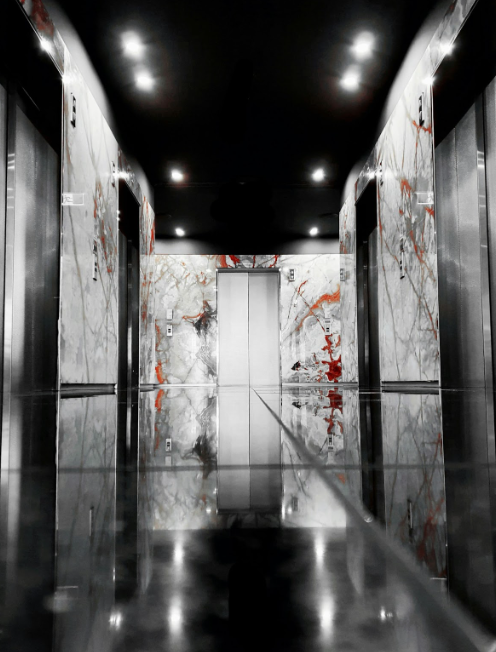
For a more unique twist, consider using geometric patterns or asymmetrical designs. And for an added touch of luxury, incorporate materials such as marble, glass or steel into your elevator design.
A word of caution on marble and stone finishes in lift cabins: they add significant dead weight to the car, which can affect counterbalance settings and increase motor load. We’ve assessed several installations where a well-intentioned cabin refurbishment with heavy stone cladding had unknowingly pushed the lift into regular overload faults. Always calculate the cabin weight impact before specifying heavy materials — or ask us to carry out a load assessment first.
7. Go For Gold or Utilise Glass
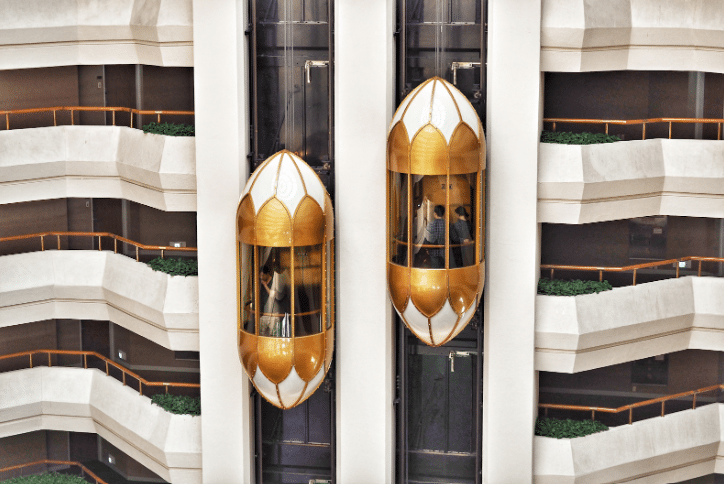
A glass lift is an ultimate way to show off your elevator design. Whether you choose a clear glass finish, glass doors or go for something more coloured or patterned, glass elevators are sure to make a statement.
For an extra touch of luxury, consider using gold-plated finishes or incorporating other precious metals into your design, like rose gold or copper. This will give the elevator a luxurious and opulent feel.
Panoramic glass lifts are structurally demanding and require specific shaft conditions — typically a clear, uncluttered shaft with no obstructive steelwork and sufficient lighting on the landings to make the glass effect work. They are also among the highest-maintenance cabin finishes, since fingerprints, scratches and seal deterioration are visible in a way they simply aren’t on opaque panels. For external or atrium-facing panoramic lifts, UV-resistant laminated glass is essential.
What Makes a Great Modern Lift Design?
Elevator design, especially in a commercial building, is a vital part of the lift experience. A well-designed elevator should be efficient, quiet and offer a comfortable ride. From a design perspective, there are a few key things to consider when creating a modern elevator design.
Functionality
The first and most important element of any good design is functionality. An elevator must be able to move people efficiently from one floor to another with minimal wait times. It should also have enough space to comfortably fit passengers and their belongings.
Without a foundation of functionality, any other design elements are moot, so opt for designs that incorporate the latest technologies and efficient layouts.
Aesthetics
While functionality is the most important element of elevator design, aesthetics are also important. After all, a unique lift lobby design can often be one of the first things people see when they enter a building, and can have a huge impact on first impressions.
Most modern elevator designs incorporate sleek, minimalist aesthetics that blend in with the overall design of the building. But there are also some unique and eye-catching designs that can make a statement, some of which we’ll outline in more detail below. If you want your elevator to stand out, consider an interesting layout or material finish.
Energy efficiency
Energy efficiency is a major concern in modern building design. As sustainability becomes more and more important, many elevator companies are incorporating eco-friendly features into their designs. From using energy-efficient materials to investing in renewable energy sources, there are many ways to make your elevator more sustainable with your lift design services.
Elevators should be designed to minimise energy consumption while still providing a smooth, comfortable ride. You could even opt for a carbon-neutral option by reinvesting profits into renewable energy sources or using old and new parts to create a bespoke, energy-efficient design. We’ll look at a few more ways to incorporate sustainability into your lift design later in the guide.
Safety and Maintenance
Elevators need to meet stringent safety standards to ensure the safety of passengers and elevator operators, so safety is always a top priority when it comes to elevator design. The best designs will incorporate features that help keep passengers safe, such as automatic doors and emergency stop buttons. They should also be designed for easy lift maintenance so that any necessary repairs can be quickly and easily carried out. The design should allow for easy access to all mechanical and electrical components.

Looking For Professional & Modern Lift Installation Services?
At Future Lift Services, we provide brand new, professional and modern lift installations across Essex and London. We are CHAS accredited, SMAS WorkSafe approved and SafeContractor certified — which matters when you’re specifying lift work in a managed commercial building where contractors must meet site compliance requirements.
We can also provide quotations to modernise existing systems that are inefficient or out of date, as well as competitive quotes for a brand new installation as part of a new development. With experience across passenger lifts, platform lifts, goods lifts and service lifts, we can create the specification that fits your building — not the other way round.
Modern technology can be used in a variety of ways to enhance the elevator experience. As part of your lift installation service, you could install large screen displays that show the current floor and destination control or estimated arrival times.
One Design Decision Most Building Managers Get Wrong
The most common mistake we see is specifying cabin finishes before assessing the mechanical condition of the lift. A beautifully designed cabin on a worn-out machine is still a worn-out machine. Before investing in a design refresh, ask your lift maintenance provider to carry out a condition assessment. If the traction system, brake, or control panel are approaching end of life, the wisest investment is usually modernisation first, aesthetics second.