
In short: lift repair cost depends on what has failed, whether a part is needed, how old the lift is, when the work is done and whether the lift is on a maintenance contract. Many faults are fixed on the first visit; others wait for parts, which can take days or weeks, and longer for older lifts. If the same lift keeps breaking down, or its parts are no longer made, modernising the worn parts can cost less over time than repairing them again and again.
This guide explains lift repair cost in plain terms for building owners, managing agents and facilities teams in the UK. We are an independent lift company repairing all makes of lift across Essex, London and the South East, and we quote before any work goes ahead.
In this guide
What affects lift repair cost
We don’t publish fixed prices for lift repairs, because two faults are rarely the same. These are the seven things that decide what a lift repair costs:
- The fault itself. Some faults are cleared in minutes once the engineer finds them, such as a door blocked by debris or a lift left on a key switch. Others, like a failed controller board, take longer to trace and fix.
- Whether a part is needed, and which one. A door contact or a push button costs far less than a drive unit, a motor or a set of ropes.
- The age of the lift and how easy parts are to find. Parts for current lifts are usually available from stock. Parts for older lifts can be hard to source, and sometimes have to be reconditioned or made.
- When the work is done. Repairs at night, at weekends and on bank holidays cost more than repairs in normal working hours.
- Whether the lift is on a maintenance contract. Contract customers have breakdown call-outs as part of their contract. One-off repairs for lifts we don’t maintain are charged per visit.
- The type of lift. Passenger, goods, platform and service lifts, and dumbwaiters, all use different equipment.
- Access and location. How easy it is to reach the site, the machine room or control cabinet, and the lift pit.
The quickest way to an accurate lift repair cost is to let an engineer see the lift. We always quote for parts and work before going ahead, so there are no surprise bills.

Common lift repairs and what they involve
These are the repairs our engineers carry out most often. What each one costs depends on the factors above.
- Door faults. The most common lift repair by far. It can mean adjusting or replacing door gear, door locks and contacts, or the safety edge (the strip that stops the doors closing on people), or clearing and repairing the door tracks.
- Controller faults. The controller is the electrical panel that runs the lift. Repairs range from replacing a relay or a circuit board to, on older lifts, replacing the controller altogether.
- Drive and motor faults. On traction lifts the drive and motor move the car. Faults can mean anything from a failed fan or encoder to a motor rewind or replacement.
- Brakes. Worn or badly adjusted brakes affect how smoothly and accurately the lift stops, and must be put right before the lift goes back into use.
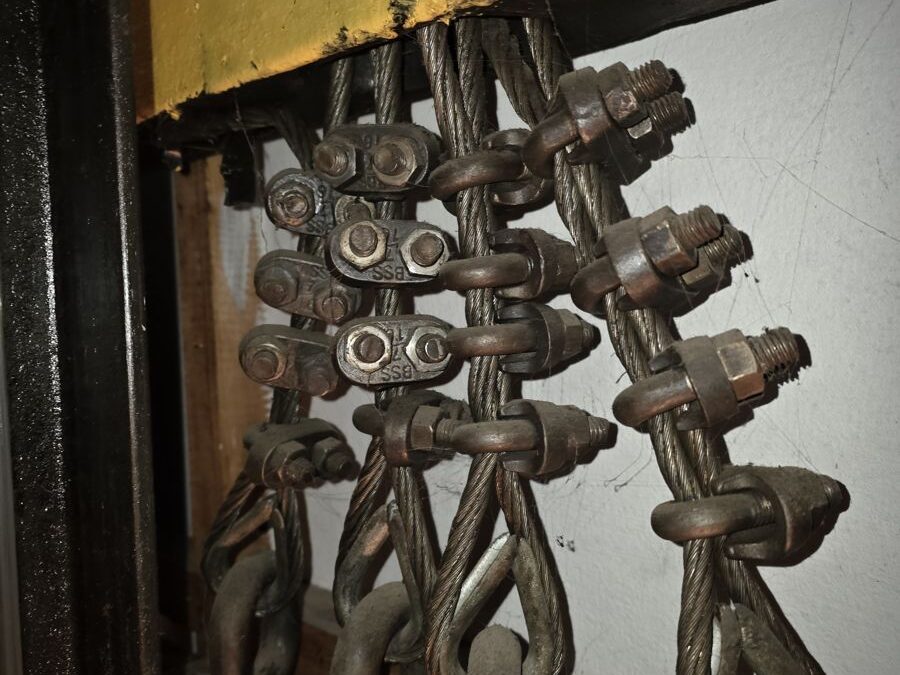
- Ropes and drive wheel. Worn ropes are normally picked up on routine maintenance or a LOLER thorough examination, and replaced as a set.
- Hydraulic faults. On hydraulic lifts, oil leaks, worn seals and valve faults can make the car sink below floor level or run roughly.
- Buttons, indicators and the emergency phone. Damaged push buttons, floor displays and alarm equipment are usually quick to replace.
- Levelling problems. If the car stops above or below the floor, it is a trip hazard. The cause can be in the controller, the brakes, the drive or, on hydraulic lifts, the valves.
Lift repairs on a contract or one-off
We repair lifts for our maintenance contract customers and for anyone else who needs us.
- On a maintenance contract, breakdown call-outs are part of the contract, and contract customers can reach us 24 hours a day. Parts are charged separately and quoted first. See our lift maintenance contract guide for what a contract covers.
- One-off repairs are for lifts we don’t maintain. We repair all makes and types of lift, charge per visit, and quote for parts and work before going ahead. Our office is open 08:00 to 17:00, Monday to Friday.
If your lift breaks down often, a maintenance contract usually works out cheaper than paying for one-off lift repairs each time, because regular servicing catches many faults before they stop the lift.
How long does it take to fix a lift?
How long a lift repair takes depends on the fault and on whether parts are needed:
- Many faults are fixed on the first visit. Door faults, switches and safety devices that have tripped are often sorted the same day.
- Parts can take days or weeks. If the engineer finds the fault but the part isn’t carried in the van, the lift may have to stay out of use until it arrives.
- Obsolete parts take longest. Parts for older lifts may need to be sourced from specialist suppliers, reconditioned or made, which can take several weeks.
- Intermittent faults take time to pin down. A fault that comes and goes can need more than one visit, and sometimes monitoring, before the cause is found.
When a part has to be ordered, we tell you what is needed, what it costs and how long it should take, so you can plan around it.
How long does it take to fix a stuck lift?
Getting people out of a stuck lift is not the same as fixing it. When someone is trapped, the first job is to release them safely, and that comes before anything else. The lift then stays out of use until the engineer has found and fixed the fault. Our lift breakdown guide explains what to do while you wait.
Lift repairs after a LOLER thorough examination
Lifts used at work need a thorough examination by a competent person, normally at least every six months for lifts that carry people, under the Lifting Operations and Lifting Equipment Regulations 1998 (LOLER). The report lists any defects and how soon each must be put right. Some must be fixed before the lift is used again; others within a set time.
We put right the defects listed on LOLER reports, including reports from examiners appointed by your insurer or another company. Send us the report and we will quote for the work. The HSE explains the duties in its guidance on lifting equipment at work.
Repair, modernise or replace?
Most lifts can be repaired many times over their working life. But there comes a point where repairs stop making sense. We advise looking at modernisation or replacement when:
- The lift keeps breaking down, with the same fault or new ones, despite repairs.
- Key parts are obsolete, such as the controller, drive or door equipment, so each repair takes longer and costs more.
- Repair costs are adding up towards the cost of modernising the worn parts.
- Upgrades are needed anyway, for example to clear LOLER defects, improve access for disabled users, or cut energy use.
Modernisation replaces the worn major parts, such as the controller, drive, doors or car interior, while keeping the parts that are still sound, such as the shaft, guide rails and often the car. It is usually quicker and less disruptive than a full replacement. See our lift modernisation page.
Full replacement means removing the old lift and installing a new one.
What affects lift replacement cost
Like repairs, lift replacement cost depends on the job:
- The type and size of lift, and how many floors it serves.
- How much of the old lift can be kept, such as the shaft and guide rails.
- Building work, such as changes to the shaft, pit or machine room.
- Access, and how the old equipment can be removed.
- Building Regulations that apply to the new installation.
We survey the lift and give a firm quote for each option, so you can compare repair, modernisation and replacement side by side.
Signs your lift needs a repair soon
Spotting a problem early usually keeps the lift repair cost down, because small faults are cheaper to fix than the damage they cause if left. Call your lift company if you notice:
- New noises: grinding, scraping, knocking or squealing from the doors, the car or the machine room.
- A rough ride: jerky starts and stops, vibration, or the car bouncing as it arrives at a floor.
- Poor levelling: the car stopping above or below the floor, leaving a step.
- Door problems: doors that are slow, reopen for no reason, bang, or don’t close fully.
- Error codes or warning lights on the controller or the floor display.
- On hydraulic lifts, a smell of oil, oil on the floor of the pit or machine room, or a car that creeps down when parked.
- Buttons or the alarm that don’t respond.
Keep the lift out of use if you think it isn’t safe, and note what you saw and when.
Lift repair costs by type of lift
Different lifts use different equipment, so the same kind of fault can mean a very different lift repair cost:
- Passenger lifts carry the most people and do the most journeys, so door gear, controls and drives wear fastest. Parts for common makes are usually available; parts for older or less common controllers can take longer.
- Goods lifts work hard and are often loaded with trolleys and pallets, so doors, gates and car panels take knocks. Repairs often involve door and gate equipment.
- Platform lifts are smaller and simpler, but many are made by specialist manufacturers, so parts may need ordering.
- Service lifts and dumbwaiters in pubs, restaurants and hotels run all day. Hatch doors, interlocks and drive belts or ropes are the usual repairs. See our dumbwaiter repairs page.
- Hydraulic lifts tend to need work on seals, valves and oil, while traction lifts tend to need work on brakes, ropes, drives and controllers.
What happens when our engineer arrives for a lift repair
- Make it safe. If anyone is trapped, they are released first. The lift is kept out of use while the engineer works.
- Find the fault. The engineer checks the controller, any error codes and the equipment, and asks what happened before the lift stopped.
- Explain and quote. If a part is needed, we tell you what it is, what it costs and how long it should take before any work goes ahead.
- Repair and test. The engineer fixes the fault and tests the lift, including the doors, levelling and alarm, before it goes back into use.
- Record it. The visit is written in the lift logbook, so there is a record for the next engineer and for the LOLER examiner.
Who pays for lift repairs?
It depends on who is responsible for the lift:
- Blocks of flats: usually the freeholder or managing agent, with the lift repair cost often recovered through the service charge. Residents should check their lease.
- Workplaces: the employer or the building owner, as the lift is work equipment.
- Rented commercial buildings: check the lease. It normally says whether the landlord or the tenant looks after the lift.
Whoever is responsible should keep the lift maintained, have it thoroughly examined under LOLER where it is used at work, and keep it out of use when it isn’t safe.
Why the cheapest lift repair can cost more
A low quote isn’t always the lowest lift repair cost in the end:
- A quick fix that doesn’t find the cause often means the same breakdown again, and another call-out.
- The wrong part, or a part that doesn’t suit the lift, can fail early or affect other equipment.
- No record in the logbook makes the next fault harder and slower to trace.
Ask what the engineer found, what caused it and what was done, and make sure it is written in the logbook.
Questions to ask before you agree a lift repair
Whoever repairs your lift, these questions help you understand the lift repair cost and avoid surprises:
- What caused the fault? A good answer explains the cause, not just the symptom.
- What part is needed, and is it new or reconditioned? Both can be right; you should know which you are getting.
- Is the quote for the whole job? Check whether it includes parts, labour and any return visit.
- How long will the lift be out of use? Especially if a part has to be ordered.
- Is anything else worn? If other parts are close to failing, it can be cheaper to do them on the same visit.
- Will it be recorded in the logbook? The record helps the next engineer and the LOLER examiner.
How to keep lift repair costs down
- Keep the lift maintained. Regular servicing finds worn parts before they fail and stop the lift.
- Report small faults early. A noisy door or a lift that stops slightly off level is cheaper to fix before it gets worse.
- Keep the door tracks clean. Rubbish in the tracks is one of the most common causes of door faults.
- Act on LOLER defects by the dates on the report.
- Keep the logbook up to date, so the engineer can see the lift’s history.
- Look after the lift. Overloading, holding doors open and damage to buttons all lead to repairs.
What to have ready when you ask for a lift repair quote
- The site address and which lift, if there is more than one.
- The make of lift, if you know it (it is often on the controller or the car operating panel).
- What the lift is doing: where it stopped, any noises, error codes or lights.
- The latest LOLER thorough examination report, if the repair is to clear defects.
- Who will meet the engineer, and any keys or codes for access.
We offer a free lift survey and quote, or see our lift repairs page for the lifts we repair.
Questions people ask
How much does a lift repair cost?
It depends on the fault, whether a part is needed, the age of the lift, when the work is done, whether the lift is on a contract, the type of lift and access. We quote before any work goes ahead.
How long does it take to fix a lift?
Many faults are fixed on the first visit. If a part has to be ordered it can take days or weeks, and longer for obsolete parts on older lifts.
Do you repair lifts you don’t maintain?
Yes. We repair all makes of lift for anyone who needs us, charge per visit, and quote first.
Is it cheaper to repair or replace a lift?
Usually repair, until the same faults keep coming back, parts become obsolete or repair costs approach the cost of modernising. We can quote for each option so you can compare.
Do lift repairs cost more out of hours?
Yes. Repairs at night, at weekends and on bank holidays cost more than in normal working hours. Contract customers have call-outs as part of their contract.