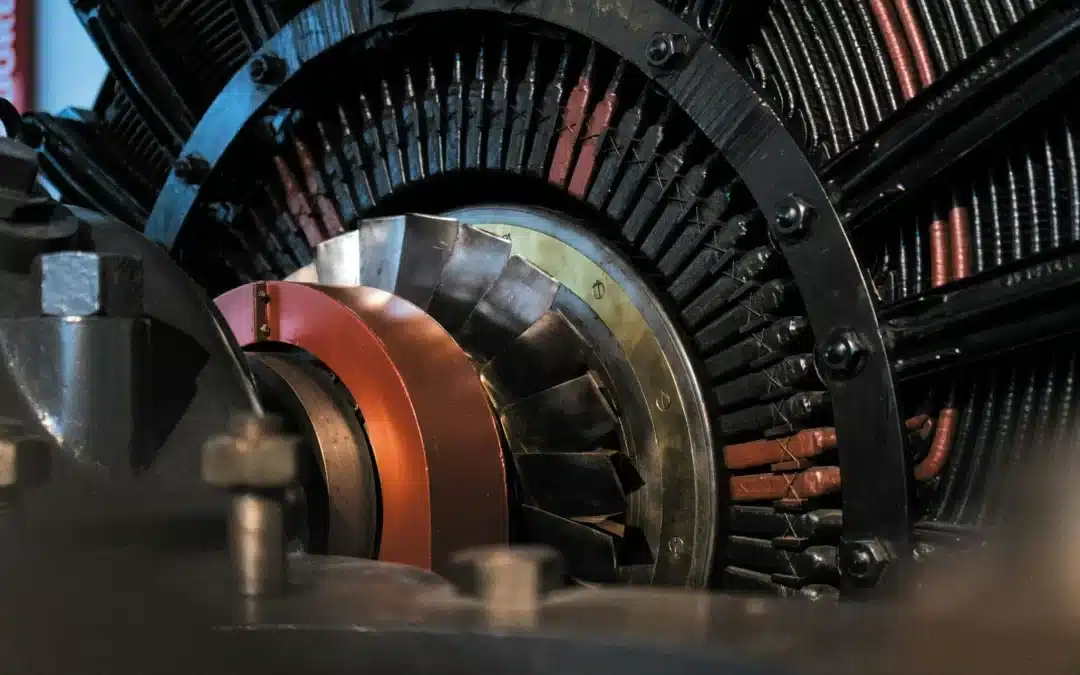
You press the button, the doors close, and the car moves. What keeps that movement quiet, smooth and safe is the motor system. A lift motor, or elevator motor, converts electrical energy into mechanical energy. It either turns the traction sheave or drives a hydraulic pump, moving the elevator car within the elevator shaft.
Lift motors sit at the heart of vertical transportation. Choosing the right one matters for both safety and running costs. Elevator motor technology has moved on a long way, and the right lift systems choice now shapes ride quality as much as reliability.
This article covers what these motors do, how the main types operate, and which motor type tends to suit different buildings and budgets. It ties those choices back to safety and compliance under EN 81 andLOLER, and to the energy efficiency gains that help reduce operating costs.
What you can expect to take away:
- A working view of the main lift motor types and where each fits
- What EN 81‑20, EN 81‑50 and LOLER mean for motor selection, installation and records
- How control systems shape ride quality, precise control and motor efficiency
- Practical selection, sizing and maintenance tips that keep people safe and costs predictable
Lift Motor Overview
AC motors make up the large majority of elevator drives, with market and standards bodies putting the figure at around 80% of installed drives globally (IEC, via F Elevator;WiseGuy Reports). Most modern elevator systems use traction technology, which tends to offer better energy efficiency over a long service life than older hydraulic arrangements. As elevator technology has matured, energy efficient drives have become the norm across the lift sector. Gearless designs improve efficiency further, while variable frequency drives give precise control of motor speed and torque. Electromagnetic brakes bring the car to controlled landings and hold it in place.
Safety and compliance that protect people and assets
Safety standards reduce risk in elevator systems. In the UK, EN 81‑20 covers safety requirements for lift construction and installation. EN 81‑50 covers the design rules, calculations, examinations and testing of lift components. LOLER requires regular thorough examinations by a competent person, plus a clear record trail. Every elevator motor and brake system sits within that compliance picture.
What property teams should track:
- Compliance: EN 81‑20, EN 81‑50 and LOLER obligations
- Safety features: overspeed protection, safety gear, controller interlocks and electromagnetic brakes
- Documentation: service contracts, inspection logs, component traceability and certificates
- Sign‑off: evidence each motor and brake has been tested before being put into service
How we approach this in day-to-day work:
- Our lift engineers in London and lift service company teams in Essex carry out documented checks during passenger lift servicing and goods lift maintenance
- We record brake function tests, overspeed governor checks and controller interlocks at scheduled visits, ready for your next LOLER examination
- Our emergency lift call out crews carry calibrated test gear to check the brake system and restore safe service quickly
A short example from the field: on a recent LOLER visit to a mixed‑use block, we found brake air gaps on a geared machine outside the manufacturer’s tolerance, with no recent torque records on file. We reset the air gap to specification, completed a dynamic stop test, and left a labelled log card in the machine room. The follow‑up examination passed without advisories.
The main lift motor types and where each fits
Different motors suit different buildings and duty cycles. The main families are AC induction motors, DC motors, permanent magnet synchronous motors, geared motors, gearless motors and hydraulic systems. Selection comes down to travel height, capacity, desired speed, noise limits and installation constraints.
AC induction motors for geared traction
AC motors, also known as asynchronous motors, are the long-standing workhorse for geared elevator motors. The stator windings create a rotating magnetic field, the rotor follows it, and torque passes through a gearbox to the traction sheave.
- Operating principle: the stator remains stationary, the rotor follows the field with some slip, and a gearbox multiplies torque
- Typical power and speed: around 7.5 to 30 kW, 4 to 12 pole machines, motor speed from a few hundred to a few thousand rpm depending on gear ratio
- Building fit: mid‑rise commercial or logistics sites with high starting torque needs
- Pros: proven, well understood, lower capital cost, widely supported for parts
- Cons: more moving mechanical components and oil, gearbox noise, higher losses than gearless
- Maintenance: oil checks, gearbox seals, brake inspection, encoder alignment
DC motors for precise speed control in legacy systems
DC motors still turn up in older plant rooms. They offer good speed regulation and smooth control, particularly on legacy controllers paired with motor‑generator sets.
- Use cases: heritage modernisations where DC infrastructure is already in place
- Pros: smooth control, good low‑speed levelling
- Cons: brushes and commutators add to motor maintenance; spare parts can be harder to source
- Maintenance: brush wear, commutator condition, electromagnetic brakes, coupling checks
Permanent magnet synchronous motors in gearless traction
Permanent magnet synchronous motors are now a common choice for modern buildings. These gearless motors use permanent magnet rotors that lock to the rotating magnetic field of the stator, removing the need for a gearbox.
- Benefits: higher efficiency, quieter operation (often close to silent operation in the car), compact design, lower operating costs over time
- Typical power and speed: often 4 to 25 kW for mid‑rise, larger for high rise buildings; low‑speed, high‑torque machines that couple directly to the sheave
- Notes: external rotor variants package neatly into machine‑room‑less systems
- Maintenance: fewer wear parts, but still needs regular brake, bearing and encoder checks
Hydraulic systems for low rise buildings
Hydraulic systems use a motor‑pump unit to pressurise fluid that moves a piston under the car.
- Benefits: compact plant, simpler building interface, cost‑effective for short travel in residential buildings and small offices
- Fit: low rise buildings at lower speeds, where ride comfort demands are moderate
- Maintenance: fluid condition, hose integrity, valve block cleaning, motor‑pump checks
How elevator motors operate, from electrons to motion
An electric motor turns electrical energy into mechanical energy. The stator windings generate a rotating magnetic field, the rotor’s magnetic field follows it, and torque turns the sheave. The elevator car then rises or descends through traction between the ropes and the sheave, or via fluid pressure in hydraulic lifts. The entire process relies on a handful of well-matched parts.
Inside the motor: the critical components
Key lift motor components:
- Stator windings that remain stationary and generate the magnetic field
- Rotor windings or permanent magnets that create the rotor’s magnetic field
- The rotating component that couples to the traction sheave or pump
- An external rotor arrangement on some gearless machines, to keep the design compact
The operating principle stays simple: the stator remains stationary, the rotor turns, torque transmits to the sheave, and the ropes move the car. The crucial component in any design is the one matched most carefully to the building’s duty.
Control systems that deliver precise control and ride comfort
Lift technology in 2026 uses modern control systems built around variable frequency drives, encoder feedback and a controller that commands motor speed and torque. In practice, that supports:
- Smoother starts and stops, with precise control at landings
- Higher speeds with fewer jerks
- More efficient operation through optimised current and torque delivery
- More consistent performance under varying load conditions
Braking and holding for safer landings
A lift’s brake system uses electromagnetic brakes. They engage to hold the machine when power is removed, and release it under controlled conditions during travel. The machine room or machine‑room‑less controller supervises brake timing, slip detection and landing accuracy. Routine brake air gap and torque tests maintain the brake’s safety margin and keep landings reliable.
Well-maintained braking and overspeed protection are central to safe vertical movement, and a key way good maintenance can enhance safety over a lift’s working life. The aim is to keep safety margins generous, rather than chase a single notion of maximum safety on paper.
Geared vs gearless vs hydraulic: which motor type suits your building
The right motor reduces energy consumption and operational costs over the life of the installation. As a general guide:
- Gearless permanent magnet synchronous motors offer high efficiency and very quiet operation for mid to high rise buildings
- Geared induction suits many mid‑rise sites where lower capital cost is a priority
- Hydraulic remains a practical fit for low rise and platform applications
| Attribute | Gearless PMSM | Geared Induction | Hydraulic Systems |
| Efficiency | High efficiency, lower energy consumption | Moderate efficiency | Lower efficiency, especially at higher speeds |
| Maintenance | Fewer moving parts, less frequent maintenance | More periodic maintenance due to the gearbox | Motor‑pump and fluid checks |
| Noise | Quieter operation, often very quiet | Moderate noise from the gearbox | Quiet in the car, mechanical noise in the plant room |
| Speed/Height | Higher speeds, suited to high rise buildings | Mid speeds, mid‑rise | Lower speeds, low rise buildings |
| Space | Compact design, machine‑room‑less possible in the elevator shaft | Needs a machine room or compact MRL | Often needs dedicated plant space |
| Costs | Lower operating costs over the lifecycle | Lower capex, higher operational costs over time | Lower capex for low rise |
| Use cases | Modern buildings, premium ride comfort | Offices, retail, logistics mid‑rise | Residential buildings up to around five stops |
Regenerative drives return braking energy to the building rather than wasting it as heat. KONE reports its regenerative drives can recover up to 20–40% of an elevator system’s total energy consumption (KONE). The exact saving depends heavily on the building’s traffic profile, so it is worth modelling against your own usage and tariff. As an illustration only, a high-traffic machine recovering 20,000 kWh a year at 30 p/kWh would save around £6,000 annually, but real-world figures vary widely with duty cycle.
Installation contexts: machine room, MRL and shaft constraints
Machine‑room‑less configurations save space by housing the motor within the hoistway. Modern gearless machines can sit in the shaft with a compact design and low heat loss, or in a traditional machine room where access and cooling are easier to manage.
Machine room vs MRL trade‑offs
- Machine room: better heat dissipation, clearer access for periodic maintenance, room for service tools, more straightforward rescue procedures
- Machine-room-less: frees up rentable area and shortens cable runs, but needs planned access platforms and careful technical specifications around clearances
Shaft and car interfaces
- Confirm guide rails, traction sheave position, controller location and cable routing
- Verify control systems integration, encoder cabling and earthing
- Follow installation guidelines on structural loads, anchor points, clearances and rescue provisions
Before any order is placed, we run a buildability review covering structural loads, clearances and electrical supply needs. We add a risk register for access and rescue, so there are fewer surprises on site.
Sizing for optimal performance: motor power, speed and duty
Correct sizing delivers consistent performance under varying load conditions. Motor power and motor speed depend on capacity, travel, duty cycle and required speeds. For continuous operation and higher duty in high rise buildings, gearless PMSM machines often provide reliable operation across a long service life.
Inputs you need before selection
- Traffic analysis by time of day
- Car capacity and counterweight ratio
- Required contract speed and ride quality target
- Duty rating, starts per hour and temperature environment
- Power supply limits and harmonic allowance
Calculating motor and drive requirements
We work out the torque at the sheave from car mass, counterweight ratio, friction and acceleration. That maps to motor power and motor speed using the sheave radius and desired contract speed. From there we size the drive, braking resistor or regen unit, and confirm cable and breaker sizes.
Environmental and power quality considerations
- Power factor and harmonics, to meet site EMC rules
- Heat dissipation and ventilation for drives and motors
- Clean earthing for the encoder and control systems
Energy efficiency that cuts bills without compromising safety
Regenerative drives reduce operating costs by recovering energy that would otherwise be lost. Recovery of around 20-40% of an elevator system’s energy use is commonly reported for regenerative drives in suitable duty profiles (KONE). Where older equipment is replaced with modern gearless synchronous machines, combined with standby modes, LED lighting and smarter controls, the cumulative reduction in annual energy consumption can be substantial.
KONE reports up to a 90% reduction for a typical European apartment-building lift between the 1980s and 2017 (KONE). IPM SynRM variants and permanent magnet synchronous motors add further gains through good efficiency at part load.
What drives energy consumption
- Losses in the motor and gearbox
- Control losses in switching and filtering
- Braking losses, where energy is not regenerated
- Usage pattern, which dictates starts, stops and idle time
Technologies that support improved efficiency
- Permanent magnet motors and permanent magnet synchronous motors with tight air gaps and low copper loss
- Gearless machines with fewer moving parts
- Advanced motor technology in the drives, managing current precisely and reducing standby draw
Control strategies for lower operating costs
- Variable frequency drives tuned with encoder feedback for optimal performance
- Regenerative drives that return energy to the building or grid
- Smart standby modes and traffic‑aware dispatch to limit idle energy consumption
Where useful, we provide a before‑and‑after kWh estimate tied to your tariff and to goals such asBREEAM credits. Efficiency gains depend on solid maintenance to sustain reliable operation.
Maintenance and lifecycle: keeping motors safe, quiet and available
A well-planned maintenance regime reduces unplanned lift downtime. With periodic maintenance, and increasingly predictive maintenance, elevator motors can give well over 20 years of service. In practice, well-maintained installations often reach 25 to 30 years before major replacement (Vosam Elevator). Gearless traction motors generally need less attention than geared machines, partly because they have fewer wearing parts.
What to inspect and when
- Monthly to quarterly: brake system tests, noise checks, encoder alignment, visual wiring checks
- Six‑monthly: bearing temperature trends, gearbox oil sample where present, traction sheave groove condition
- Annually: insulation resistance, verification of motor parameters, overspeed governor and safety gear tests
- Predictive maintenance: vibration and current signature analysis to catch bearing or rotor issues early
Signs you may need lift system upgrades or modernisation
- Energy consumption rising against the established baseline
- Noticeable levelling errors or roughness in the ride
- Frequent brake resets, or hot smells in the machine room
- Obsolete DC drives with poor parts availability
- Rising operational costs and more noise complaints
How Future Lift Services specifies, installs and maintains the right motor
Independent advice matters. We are not tied to a single manufacturer, so our recommendations are unbiased and draw on multi‑brand solutions.
What we do:
- A free, no‑obligation survey and a transparent quote
- An option appraisal across DC motors, AC motors, geared motors, gearless motors and hydraulic systems, to select a suitable motor
- Lifecycle modelling covering capital cost, operating costs and downtime exposure
- Lift installation to technical specifications, with safe commissioning and handover training
- Ongoing lift maintenance with documented LOLER support and reliable performance
- Emergency lift call out response in London and Essex within agreed SLAs
We work on lift repairs, maintenance and modernisation for commercial and residential facilities across the United Kingdom. With over 25 years of experience, we are confident we can match a high-quality service to your needs.