
Designing lifts for modern workplaces is about more than just vertical travel. It’s about how people move, connect, and experience a space. As cities continue to rise and offices occupy taller buildings, the design of safe, efficient, and beautiful lift systems has become essential. The modern lift design process requires a balance of technology, regulation, and aesthetics to create reliable systems that enhance daily working life.
From integrating smart systems to refining lift interiors with elegant materials, each design element contributes to environments that reflect thoughtful planning and forward-thinking architecture. The goal is not just to meet current needs but also to anticipate how people will use buildings in the future.
Lift Design and Safety Regulations
Modern lift design starts with safety. Regulations are the foundation of every project, ensuring that lifts protect passengers and perform safely over their lifetime. Compliance isn’t simply about ticking boxes; it’s about designing confidence into every journey.
In the UK and Europe, key safety standards govern this process:
- EN 81-20 and EN 81-50: Define the BS safety rules for constructing and installing passenger and goods lifts.
- LOLER (Lifting Operations and Lifting Equipment Regulations): Ensures that all lifting equipment is safe, regularly inspected, and maintained.
- Fire Safety Compliance: Requires fire-resistant materials, additional protection systems, and clear evacuation protocols.
Following these regulations reduces risks significantly. According to HSE, working in line with LOLER contributes to a significant decline in lift-related incidents across UK offices and commercial buildings.
Enhancing Energy Efficiency in Lift Design
Modern lift design also focuses on sustainability. As buildings grow in size and complexity, energy efficiency has become a defining factor in how engineers and architects plan lift systems.
There are several smart ways to enhance efficiency:
- Regenerative drives: Capture and reuse energy generated during lift travel, reducing wasted power.
- LED lighting: Adds brightness to the lift car and interior while saving energy and lasting longer.
- Standby mode: Automatically powers down non-essential systems when the lift is idle.
These lift upgrades can reduce energy consumption when energy performance is integrated thoughtfully into the design process, lifts not only consume less power but also support the sustainability goals of modern offices and multi-floor buildings.
Integrating Smart Technology in Lift Design
The integration of smart lift technology has redefined what it means to design lifts that truly respond to user needs. Lift systems now combine intelligent software with precision engineering to create smoother, faster, and more intuitive travel for passengers.
Some leading innovations include:
- Destination control systems: Direct people to the right lift based on their intended floor, improving flow and reducing wait times.
- IoT sensors: Provide real-time monitoring that enables predictive maintenance, reducing downtime and prolonging the life of key equipment.
- Touchless controls: Enable hygienic operation through sensors and smartphones.
According to KONE, destination control can cut wait times by up to 30%, creating more efficient lift traffic in busy environments. These systems also support accessibility and make daily travel to multiple floors easier for everyone.
Accessibility and Inclusive Lift Design
Accessibility is at the heart of inclusive lift design. A modern lift must enable safe and comfortable access for all users, regardless of physical ability. Creating accessible solutions also ensures lifts for public buildings comply with the Equality Act 2010, improving user satisfaction and inclusivity.
Key accessibility design elements include:
- Braille and tactile buttons: Practical features that support visually impaired users.
- Audible floor announcements: Inform passengers of their destination and any important alerts.
- Wide landing doors and spacious lift cars: Accommodate wheelchairs, prams, and mobility aids comfortably.
Accessibility is not just a requirement, it’s part of a refined design philosophy that values every individual’s ability to move freely through a building.
Material Selection and Aesthetic Design
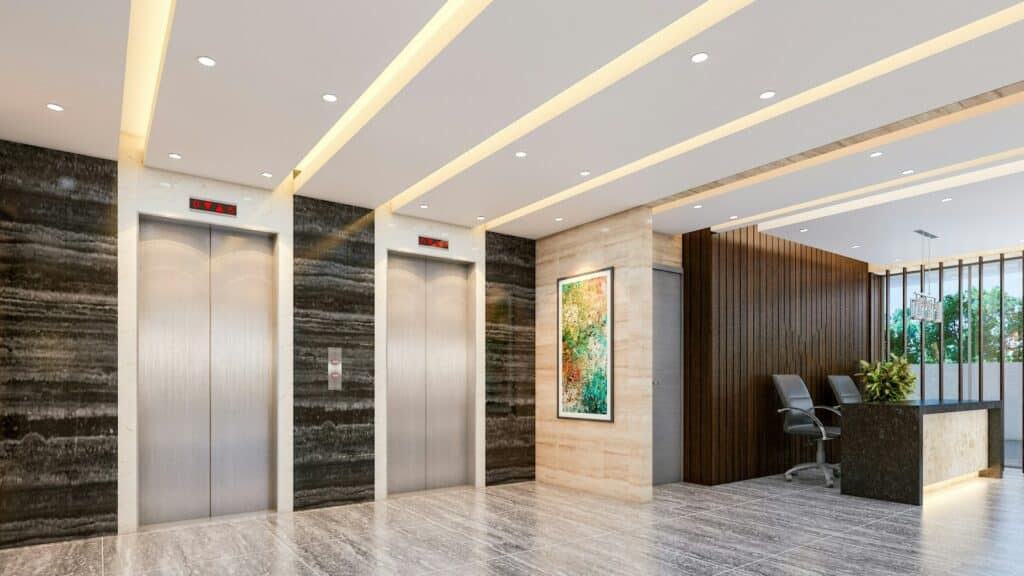
Material selection shapes both the look and feel of a lift. Designers carefully curate materials during the planning and specification stages to define a space that feels sleek, durable, and aligned with the interior design vision of the building.
Common materials used include:
| Material | Advantages | Disadvantages |
| Steel | Strong and durable | Heavy, higher cost |
| Glass | Luxurious and elegant aesthetic | Fragile, expensive |
| Aluminium | Lightweight, corrosion resistant | Less strong structurally |
In high-end offices, for example, designers might create a custom lift design that combines brushed steel with marble finishes, subtle lighting, and warm colours to achieve a refined, modern look. Each material must meet specific requirements for durability, cost, and hygiene, while also aligning with the intended style of the project. Even smaller accessories like control panels, ceilings, or horizontal strips of accent light can define the sense of luxury and function in the lift space.
Cost Analysis and Economic Considerations
Every lift design project involves balancing performance with cost. Initial installation, ongoing maintenance, and long-term energy savings all determine how cost-effective a lift system will be over its life span.
Main cost factors include:
- Installation costs: Covering materials, equipment, and ensuring lifts comply with safety and performance standards.
- Maintenance needs: Regular servicing to maintain performance, reliability, and safety.
- Energy efficiency savings: Regenerative drives and LED systems provide long-term financial benefits.
Efficient design decisions lead to reduced total costs and longer-lasting systems. For more practical guidance on planning a cost-effective system, lift specialists like Future Lift Services provide project-specific advice and support.
Contact Us
Summary and Key Takeaways
Designing lifts for modern workplaces is a collaborative process that blends safety, technology, accessibility, and style. By planning carefully and taking all design elements into account, architects and lift designers can create systems that are not only safe and efficient but also elegant and user-friendly.
- Safety first: Comply with EN 81-20, EN 81-50, and LOLER to protect users.
- Energy efficiency: Employ regenerative drives and LED lighting to save up to 40% of energy.
- Smart integration: Use destination control and IoT sensors to streamline lift operation.
- Inclusive design: Ensure accessibility through wider lift doors, tactile controls, and audible assistance.
- Material selection: Use a carefully curated selection of materials to achieve the desired interior design style.
- Economic planning: Consider both installation costs and long-term maintenance to maintain sustainable value.
Modern lift design defines how we move through the vertical world, turning everyday journeys between floors into experiences that feel seamless, safe, and sophisticated.
Closing Thoughts
Looking ahead, the future of lift modernisation is all about intelligent upgrades that enhance performance, sustainability, and style without disrupting existing buildings. As technology evolves, updating lifts with smart controls, energy-efficient systems, and refreshed interiors will become essential to maintain safety and functionality.
Modernisation services will continue to define how older lifts adapt to the needs of tomorrow’s workplaces, ensuring they remain both functional and refined for years to come.
With years of experience in the industry, our expert lift engineers have the expertise and skills to carry out a range of lift modernisation solutions effectively and efficiently. We offer a range of lift services, including modernisation, lift installation, maintenance, and more.
Contact Us
FAQs
1. What factors should be considered when planning a lift design project?
Effective lift planning involves assessing building size, traffic flow, accessibility needs, and future maintenance requirements. Every detail, from choosing the right equipment to defining finishes, should align with how the lift will be used. Early collaboration between architects, engineers, and interior designers ensures a lift that’s safe, efficient, and visually cohesive with the surrounding space.
2. How do designers ensure every lift design detail meets regulations and user expectations?
Designers focus on both technical compliance and user experience. They review BS and EN standards carefully, ensure accessibility for all users, and refine elements like lighting, materials, and lift car layout. Attention to detail during the design process helps create a lift that’s both functional and aesthetically refined.
3. How can I determine if modernisation is suitable for my existing lift?
A modernisation specialist can assess your lift’s age, performance, and safety record to decide which upgrades are most suitable. In many cases, updating control panels, landing doors, or drive systems can extend the lift’s life and improve energy efficiency without full replacement. Careful planning ensures upgrades meet current standards while fitting your building’s style and operational needs.