When it comes to keeping lifts safe, reliable, and compliant, a comprehensive lift maintenance contract is not just a tick in the box, it’s a critical partnership for building owners and managers seeking complete peace of mind in their business operations. Whether dealing with routine maintenance or unexpected breakdowns, an expertly tailored maintenance package ensures optimum performance and cost effective solutions for lift equipment in the long run.
This guide uncovers exactly what’s included in modern UK lift maintenance agreements, helping customers, building owners, and site teams navigate the process with confidence.
Essential Components of Lift Maintenance Contracts
Routine Preventive Maintenance Services
Preventative lift maintenance forms the backbone of any reliable lift service contract, directly addressing potential issues before they become major problems. Most lift maintenance contracts cover scheduled service visits, typically ranging from 2-6 per year for residential lifts and up to 12 for high-usage commercial lifts. Lift engineers oversee regular inspections, cleaning, lubrication, and adjustment of weak or faulty components, with performance diagnostics and reporting for complete transparency.
- Lubrication and regular cleaning of mechanical equipment mean components run efficiently and last longer.
- Safety systems and essential components are tested and adjusted to suit usage patterns and compliance requirements.
- Performance monitoring ensures customers receive excellent service and optimum efficiency for equipment throughout its lifespan.
An average elevator may experience about 0.5 to 4 breakdowns per year, with the rate depending on factors like usage, location, and maintenance quality. In general, high-traffic and industrial elevators have higher breakdown rates, while regularly serviced and well-maintained lifts experience fewer issues.
Emergency Response and Breakdown Coverage
The real test of any lift maintenance package is how it deals with emergencies and lift breakdowns, giving building occupants complete peace of mind and efficient resolutions. Lift maintenance providers guarantee 24/7 emergency callout coverage, ensuring engineers respond rapidly in crisis.
- Response times are typically 1-2 hours for trapped passengers (entrapments), with standard breakdowns responded to within 4-24 hours, always prioritising safety and comfort.
- Comprehensive maintenance contracts include out-of-hours coverage so building owners don’t face delays or stress when lift equipment fails.
- Clear emergency contact procedures and repair protocols ensure work carried is documented, with spare parts and replacement components available on demand.
Emergency response capabilities remain a legal requirement under UK safety and compliance rules, directly linking to regulatory authorities’ performance standards.
Regulatory Compliance and Safety Inspections
Lift maintenance is not simply about keeping lifts running, it’s about meeting strict legal requirements that protect building occupants and maintain the reliability of every lift. Maintenance contracts must address thorough examination under LOLER regulations (Lifting Operations and Lifting Equipment Regulations), with competent person inspections every six months for passenger lifts and annual checks for goods lifts.
- All repairs, regular maintenance, and full lift safety inspections must comply with HSE and local council mandates.
- Insurance companies may require regular LOLER certificates for continued coverage and risk mitigation.
- Records and documentation must be maintained for a minimum of ten years, safeguarding against liability and legal penalties.
Understanding these regulatory frameworks is crucial for choosing the right maintenance contract tailored to site-specific lift technology and usage.
Types of Lift Maintenance Contracts
Lift maintenance contracts come in different forms to suit every building and budget. The right maintenance package depends on service levels, coverage needs, and the expected lifespan of installed lift equipment.
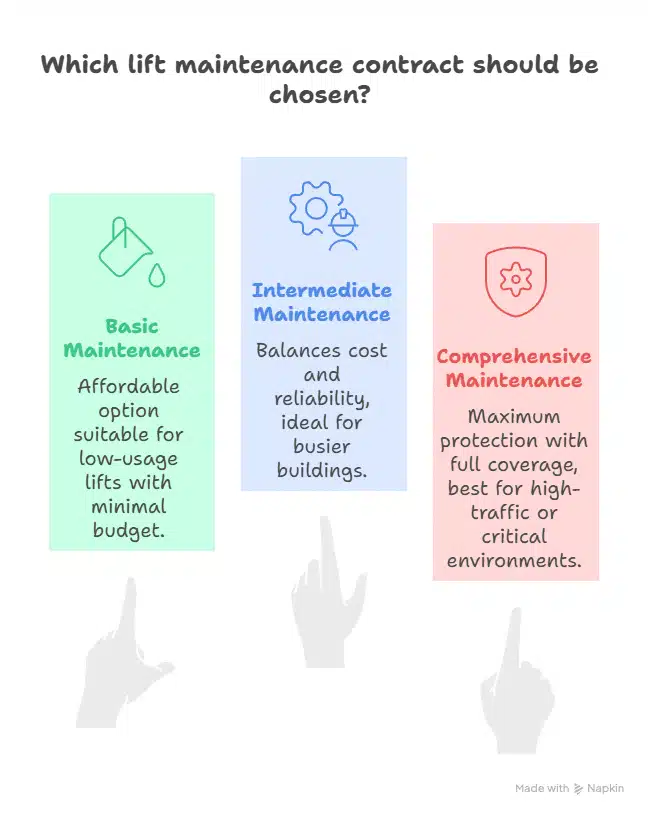
Basic Maintenance Contracts
Basic contracts (sometimes called “oil and grease” agreements) cover routine servicing such as regular cleaning, lubrication, and scheduled site visits, typically just two per year.
- Excludes all breakdown repairs, parts, and labour charges, making it the most affordable option.
- Ideal for lifts with low usage or properties with minimal budget requirements.
Basic maintenance contracts are recommended only for situations where reliability isn’t a critical concern.
Intermediate Maintenance Contracts
Intermediate contracts extend basic service packages with breakdown attendance during normal working hours, some perishable parts, and limited labour coverage.
- Exclusions typically include major components and out-of-hours callouts.
- These contracts are suitable for busier buildings needing greater reliability and cost control.
Comprehensive Maintenance Contracts
For lifts serving high traffic or mission-critical environments, comprehensive lift maintenance contracts deliver maximum protection.
- All regular maintenance, repairs, and replacement parts are included.
- Full 24/7 emergency coverage and proactive modernization support are standard.
- Annual costs range from £5,000 to £10,000, with up to £1,000 of free repairs available from some providers.
- Modern contracts often include upgrade consultation, ensuring the lift service team proactively manages obsolete parts and future proofing.
The choice depends on components, technology, and the specific needs of each building.
Read More: Lift Service Contracts: What Property Owners Should Know
Coverage Variations by Lift Type
Different lifts require distinct maintenance approaches, reflected in each maintenance contract and service package.
Hydraulic Lift Maintenance Specifications
Hydraulic lifts demand regular hydraulic fluid management, pump maintenance, and pit cleaning for environmental safety.
- Fluid replacement schedules and leak prevention checks help prolong the lifespan.
- Servicing is more frequent and typically costs £200–£400 per year.
Traction Lift Maintenance Specifications
Traction lifts rely on steel rope and counterweight inspection, electric motor diagnostics, and energy efficiency monitoring.
- Maintenance contracts cost £300–£650 annually but offer longer lifespans (25–30 years).
- Service visits focus on replacing faulty components and ensuring safe operation.
Platform and Stairlift Contract Considerations
Platform lifts and stairlifts require accessible contracts tailored to mobility users, with warranty integration and specific safety checks.
Regardless of type, the right maintenance contract boosts efficiency and reliability, benefiting building owners and customers.

Contract Terms and Pricing Structures
Lift maintenance contracts vary in cost and terms, shaped by factors like contract duration, lift age, site usage, required service levels, and geographic location.
Pricing Models and Cost Factors
- Contract duration commonly ranges from three to twenty-five years, with longer agreements offering better pricing and coverage.
- Service visit costs average £90–£200, with annual maintenance packages from £3,500–£10,000 for commercial lifts.
- Transparent pricing guarantees excellent service within budget, avoiding nasty surprises.
Performance Metrics and Service Level Agreements
Service contracts incorporate robust performance metrics: response time guarantees, uptime targets, penalties for missed benchmarks, and strict reporting protocols.
- SLAs (service level agreements) typically specify 1–4 hour response for emergencies and 24 hours for standard breakdowns.
- For reliable lift maintenance, contracts must set clear targets for efficiency and cost effectiveness.
Insurance, Liability, and Risk Management
Comprehensive lift maintenance contracts must address insurance and liability, guaranteeing protection for all parties under UK law.
Insurance Requirements and Coverage
- Contractors need liability insurance, while building owners are responsible for LOLER inspection insurance.
- Machinery breakdown coverage and bi-annual inspection costs (e.g., £282.35 for inspections, £112.00 for machinery breakdown) form part of the risk management package.
Risk Allocation and Liability Management
Contracts detail risk allocation: contractors vs building owners, exclusions for misuse, accidental damage, and clear indemnification clauses.
- Proper record keeping is essential for compliance and insurance claims.
Documentation and Reporting Requirements
Maintenance contracts require comprehensive documentation: site logs, examination certificates, compliance records, performance reports.
- Maintenance visit logs and breakdown documentation are usually retained for a minimum of ten years.
- Reporting timelines matter: breakdowns should be documented within ten working days, engineer reports submitted within 72 hours.
These processes support modernization planning and enhance future performance.
Modernisation and Future-Proofing Provisions
Forward-thinking lift maintenance contracts include provisions for lift modernisation upgrades, technology integration, and energy efficiency enhancements.
- Planned upgrade consultation, smart monitoring, and obsolete parts management ensure lifts stay reliable and compliant.
- Energy savings and modernization planning drive long-term value and efficiency.
Closing Thoughts
Navigating the world of lift maintenance contracts requires trust in expertise, transparent pricing, and a full understanding of legal requirements.
By partnering with a professional, highly recommended team of lift engineers, businesses not only meet regulatory obligations but also extend lift lifespan, enhance performance, and secure complete peace of mind.
We are experts in lift repairs, maintenance, and modernisation for all commercial and residential facilities throughout the United Kingdom. With over 25 years of experience, we are convinced that we can provide you with a high-quality service that matches your individual demands and expectations.
Get in touch with us today to find out more about our modern lift services or to request a free, no-obligation quote with us, based in London and Essex!
Contact Us
FAQs
What is preventative maintenance for lifts and why is it important?
Preventative maintenance refers to regular scheduled servicing of lifts, including checks, lubrication, adjustments, and part replacements by qualified engineers to prevent costly breakdowns and ensure ongoing safety and reliability. This proactive approach reduces the risk of faults and increases lift lifespan.
What responsibilities do lift owners have under LOLER regulations?
Lift owners must arrange regular thorough examinations by competent individuals, every 6 months for passenger lifts and every 12 months for goods lifts, keep records of inspections and maintenance, and promptly repair any defects to meet LOLER safety standards and legal duties. Failure to comply can result in fines and increased safety risks.
How do lift maintenance contracts handle emergency call outs?
Most contracts include rapid emergency call out services for breakdowns or entrapments, with 24/7 availability and response time guarantees (1–4 hours for emergencies), supporting owners’ legal obligations for passenger safety and regulatory compliance. Service providers dispatch engineers to resolve urgent lift issues and restore normal operation quickly.