Maintaining, inspecting, and testing your passenger lift system on a regular basis is fundamental to lowering the danger of a serious incident, malfunction, or even potential harm, while also guaranteeing the efficiency and safety of your lift.
When doing said elevator maintenance inspection, keep a checklist of the vital components that need to be inspected on hand. Our lift engineers have carried out thousands of these examinations and in this guide they highlight the most important checkpoints — and what is at stake if each one is missed.
To avoid the risk of accidents and costly repairs, here is your essential passenger lift inspection checklist:
What is a passenger lift inspection checklist?
A passenger lift inspection checklist is a comprehensive guide used by technicians to ensure the safety, efficiency, and reliability of lift systems. It outlines the key areas within the lift car, machine room, and shaft that need regular checks to maintain optimal functionality.
The checklist covers everything from the condition of lift doors and safety equipment to the inspection process for emergency evacuation procedures. By adhering to a structured lift maintenance checklist, potential hazards can be identified early, ensuring the safety of all passengers while also preventing costly repairs.
16 point passenger lift inspection checklist
A lift engineer should do regular maintenance checks that include extensive inspections of the interior and outside of the passenger cabin, as well as maintenance logs on the machine room, shaft, and pit. Here is a comprehensive passenger lift safety checklist.
Each checkpoint below is rated for the risk it carries if missed: [HIGH] = failure mode could cause injury, entrapment, or unplanned shutdown; [MEDIUM] = failure likely causes major repair or regulatory non-compliance; [LOW] = failure causes minor inconvenience or aesthetic issue.
Passenger cabin maintenance
1. [LOW] Examine and replace the external call button lights.
2. [HIGH] Examine the elevator door panels and clearance. Doors that are out of alignment or have incorrect clearances are one of the most common causes of passenger entrapment and door-related injuries. If the door gap is outside EN 81-20 tolerances, the lift should be taken out of service until rectified.
3. [HIGH] Examine the firefighter lift controls. In a fire evacuation, a malfunctioning firefighter switch means first responders cannot take manual control of the lift. This is a life-safety system and a regulatory requirement under BS 5655.
4. [MEDIUM] Test the lift’s acceleration, deceleration, and levelling to ensure smooth and accurate operation. A lift that does not level accurately at floor plates creates a trip hazard, with particular risk for wheelchair users and the elderly.
5. [HIGH] Inspect the lift door to make sure it doesn’t bang or bounce while shutting and that the door restrictor is working properly. A door that bounces or reverses unpredictably can trap passengers; a missing restrictor can allow the door to be opened manually between floors.
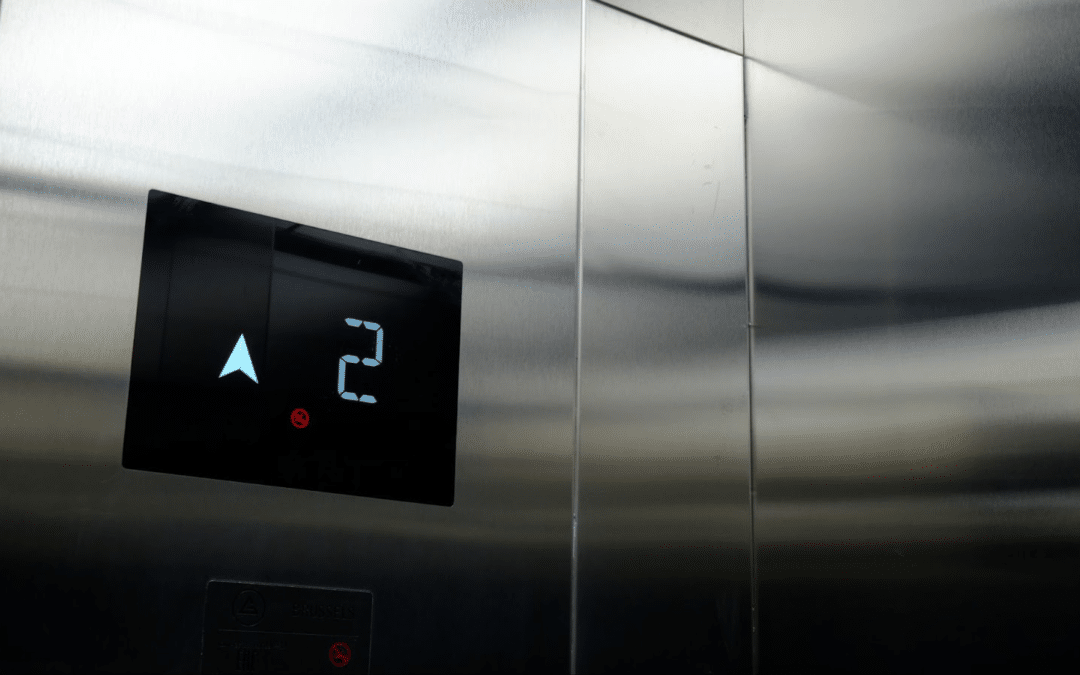
6. [LOW] Inspect position indicators and replace any burned-out lights.
7. [MEDIUM] Inspect the interior of the cabin for damage or wear and tear to the ceiling, handrail, floor, and walls. Handrail failure is a slip-and-fall liability; worn flooring creates a trip risk at the threshold.
Machine room inspection
1. [MEDIUM] Make certain that the machine room is clean and that any prohibited materials are removed. A cluttered machine room is both a fire risk and an impediment to emergency access by engineers.
2. [HIGH] Inspect all components for signs of wear, unusual vibration, or leakage. Hydraulic fluid leaks, in particular, can cause both fire risk and sudden loss of lift function.
3. [HIGH] Examine all electrical wiring for failure, wear and tear, or overheating. Overheating wiring is the most common precursor to a lift electrical failure — and it is not visible without an inspection. This is one of the checks that most reliably catches developing faults before they become costly.
4. [MEDIUM] Check the oil level. Low hydraulic oil causes sluggish or erratic operation in hydraulic lifts and can cause the pump to overheat.
5. [LOW] Elevator components lubrication should be performed as needed.
Pit maintenance
1. [HIGH] Examine the lift cable for snags or evidence of wear. A worn suspension rope does not fail suddenly — it frays progressively, and the deterioration is detectable only under close inspection. Cable replacement at the right time typically costs £1,500–£3,500; cable failure leading to a drop event would be catastrophic.
2. [HIGH] Inspect the condition of the guide rails, rollers, and switches. Corroded or misaligned guide rails cause vibration, uneven travel, and in extreme cases, derailment. This is the checkpoint most likely to catch a slow-developing problem that would eventually cause a major repair or injury.
3. [MEDIUM] Check and clean the sump pump. A blocked sump pump allows water to accumulate in the pit, which corrodes components and creates an electrical hazard.
4. [HIGH] Check that the spring buffers are securely attached and inspect for proper alignment and corrosion. Spring buffers are the last line of defence if a lift overshoots the bottom floor. Corroded or detached buffers are a catastrophic failure risk — but because they sit at the bottom of the pit and are rarely visible, they are commonly overlooked.
Why is an elevator maintenance inspection important?
A defective elevator part may go undiscovered until a substantial repair is required if there is no maintenance plan in place. This substantial repair can be costly and inconvenient, especially in buildings where elderly or ailing residents must travel above the first floor to their residences.
The value of an elevator is proportional to how effectively it is maintained over its lifecycle. A comprehensive elevator maintenance plan reduces the hazards that elevator/building owners and users may encounter.
If an elevator is not properly maintained, the building owner may suffer financial risk, liability difficulties, and irate tenants.
What to do if you find a defect
Not every defect found during an inspection requires the same response. As a guide: a LOW-risk issue (e.g. burnt-out indicator light) should be logged and scheduled for repair at the next maintenance visit. A MEDIUM-risk issue (e.g. handrail wear, low oil level) should be repaired within a defined number of days and not allowed to persist across a full service interval. A HIGH-risk issue (e.g. worn cable, misaligned guide rails, faulty door restrictor) should result in the lift being taken out of service until the defect is rectified — regardless of the inconvenience. Building owners who keep a lift running despite a known HIGH-risk defect are exposed to enforcement action under LOLER and potential civil liability.
How often are lift inspections required?
Lifts and lifting equipment are governed by the Lifting Operations and Lifting Equipment Regulations (LOLER) 1998 in the United Kingdom.
All forms of lifting equipment must be thoroughly inspected by a qualified individual. When conducting a complete examination, the equipment and the most critical components in terms of safety equipment must be checked; this should be done at regular intervals, and the findings documented in a comprehensive report.
Unless otherwise specified, an examination should be performed at the following intervals: every 6 months for lifting equipment and any other equipment used to lift people/passengers; every 6 months for lifting attachments; every 12 months for all other lifting equipment.
The competent person inspecting the lift or lifting equipment will complete the examination using industry standard criteria, which, along with the person’s professional judgement, will assure the equipment’s continuous safety and advise a plan for any necessary lift maintenance or preventive maintenance.
One requirement that building owners frequently misunderstand: the LOLER thorough examination must be carried out by a competent person who is independent of the maintenance contractor. Your regular maintenance engineer cannot also be your LOLER examiner — the independence requirement exists specifically to ensure the examination is objective. A LOLER thorough examination for a standard passenger lift typically costs £150–£350.
How do elevator service technicians conduct an inspection?
Lifting equipment may also need to be inspected at appropriate intervals between complete exams under LOLER. The competent person determines the scope and regularity of inspection requirements based on risk assessment.
Potential concerns that an inspection regime may detect include: fast wear caused by use in a harsh environment; failure due to frequent operation; malfunction; interference with safety devices.
A thorough examination regime may check for and identify areas of poor maintenance, but it is not meant to replace or be mistaken with scheduled maintenance regimes.
Preventive maintenance seeks to guarantee that lifting equipment continues to function as intended while avoiding dangers associated with wear or degradation. Duty holders should not wait for the findings of a complete examination before carrying out maintenance on lifting equipment, according to the HSE.
The goal of both regimes is to ensure that passenger elevators remain safe during operational usage. Both the competent person and the duty holder are responsible for ensuring that adequate documentation and records are available.
Expert lift inspections from Future Lifts
A well-defined elevator inspection checklist and maintenance plan reduces safety hazards, reduces the cost of costly repairs, and assures the elevator is operating in accordance with standards.
We offer first-rate installation and maintenance services for lifts in workplaces, public buildings, and other commercial structures. If your building uses platform lifts, passenger lifts, or other types of access equipment that elevates passengers, we can also assist with LOLER testing and certification.