
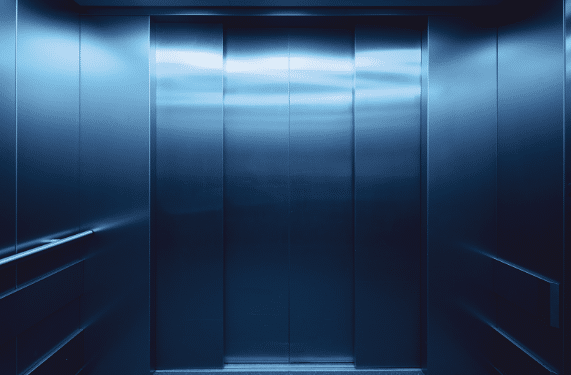
There are over 325 million elevator rides every single day. The stainless steel interior of a passenger lift absorbs all of that traffic — fingerprints, cleaning product residue, occasional chemical damage — and the difference between a lift that looks professionally maintained and one that does not is almost always down to cleaning method, not cleaning frequency.
Incorrect cleaning is the leading cause of premature surface damage on lift interiors. We see the consequences on maintenance visits: scratched panels from abrasive pads, corrosion from chlorine-based cleaners left in contact too long, and permanent streaking from cross-grain wiping. This guide covers the 11 steps that prevent those problems.
11 Steps for Cleaning Your Stainless Steel Elevator
Step 1: Choose the Right Cleaning Chemicals
Dish soap, glass cleaners, and specialist stainless steel cleaners are all safe choices. Avoid anything abrasive — steel wool, scouring powder, rough cleaning pads — and avoid bleach, ammonia-based products, and chloride-containing cleaners. These will not only scratch the surface but can cause corrosion that is invisible initially and worsens over time. If in doubt, opt for a pH-balanced cleaner.
Step 2: Gather the Necessary Equipment
You need a microfiber cloth, a non-abrasive sponge, a spray bottle for your cleaning solution, and ideally a large towel to protect the lift floor during cleaning. Separate cloths for buttons and wall panels prevent cross-contamination of grime.
Step 3: Prepare the Surface
Before applying any cleaning solution, remove visible debris — dust, dirt, larger particles — that could scratch the steel when you wipe. A dry pass with a soft cloth first prevents grit from acting as an abrasive against the panel finish.
Step 4: Clean the Steel
Wipe gently with a damp microfiber cloth. Pay extra attention to seams, door edges, and button areas where grime accumulates. Always wipe in the direction of the grain — cross-grain or circular motions leave visible streaks and micro-scratches that accumulate with each clean.
Step 5: Polish the Surface
Apply a specialist stainless steel polish after cleaning — this minimises future smudging and significantly extends the time between full cleans. A vinegar-and-water solution is a natural alternative. Whichever you use, polish in the direction of the grain with a soft cloth.
Step 6: Establish a Regular Cleaning Schedule
For high-traffic commercial lifts, daily spot cleaning of buttons and door panels plus a weekly full clean is a reasonable baseline. The right frequency depends on footfall and building use — a residential lift used by a handful of households needs far less attention than a retail or office lift with hundreds of daily users.
Step 7: Focus on Grime-Prone Areas
Door edges, button panels, and floor-level skirting collect more dirt than wall panels. Use a dedicated cloth for these areas and do not use the same cloth you used on the panels — you will simply redistribute grime.
Step 8: Steam Clean for Deep Cleans
Steam cleaning sanitises the surface as well as cleaning it, making it a useful option for healthcare and food-service environments. Always use low pressure and avoid directing steam at control panels, door sensor apertures, or electrical components.
Step 9: Deal with Tough Stains
Make a paste from baking soda and water, apply it to the stain, leave for a few minutes, and gently scrub with a non-abrasive sponge. Follow up with a pH-balanced cleaner and polish as normal. Do not use abrasive tools regardless of how stubborn the stain — scratches in stainless steel are permanent.
Step 10: Educate Your Cleaning Staff
The most common cleaning damage we see is caused by staff using the wrong products — bleach-based multi-surface sprays, steel wool pads, or circular wiping motions. A brief written guide posted near the cleaning cupboard, combined with an initial demonstration, prevents the majority of these incidents.
Step 11: Keep a Maintenance Log
Record what was used, when, and what was found. This catches patterns — repeated staining in a particular location may indicate a water ingress issue or a cleaning product being used incorrectly. A log also provides evidence for warranty claims if panel damage does occur.

Why Is Elevator Cleaning Important?
Never use bleach, ammonia-based cleaners, or chloride-containing products on stainless steel. Avoid excessive moisture on steel floors — this creates slip hazards and can damage finishes. Keep liquid cleaners away from door tracks and control panels. Use a separate glass cleaner for any mirror surfaces to avoid cross-contamination.
Looking for Expert Lift Maintenance?
Future Lift Services provides comprehensive lift maintenance and servicing across Essex and London. Contact us for a free quote.