Last updated:
Elevators malfunction at least four times a year on average, according to data from a smart lift technology expert, and each malfunction takes an average of four hours to fix. Across the UK’s approximately 300,000 lifts, that adds up to a significant volume of downtime — and, more importantly, a significant number of people trapped between floors waiting for an engineer. Most of these incidents are preventable.
This guide covers the seven most common causes we see on callouts, what the early warning signs look like, and what to do if you or a building occupant gets stuck.
7 Reasons Why Elevators Break Down
Cause 1: Worn Sheaves
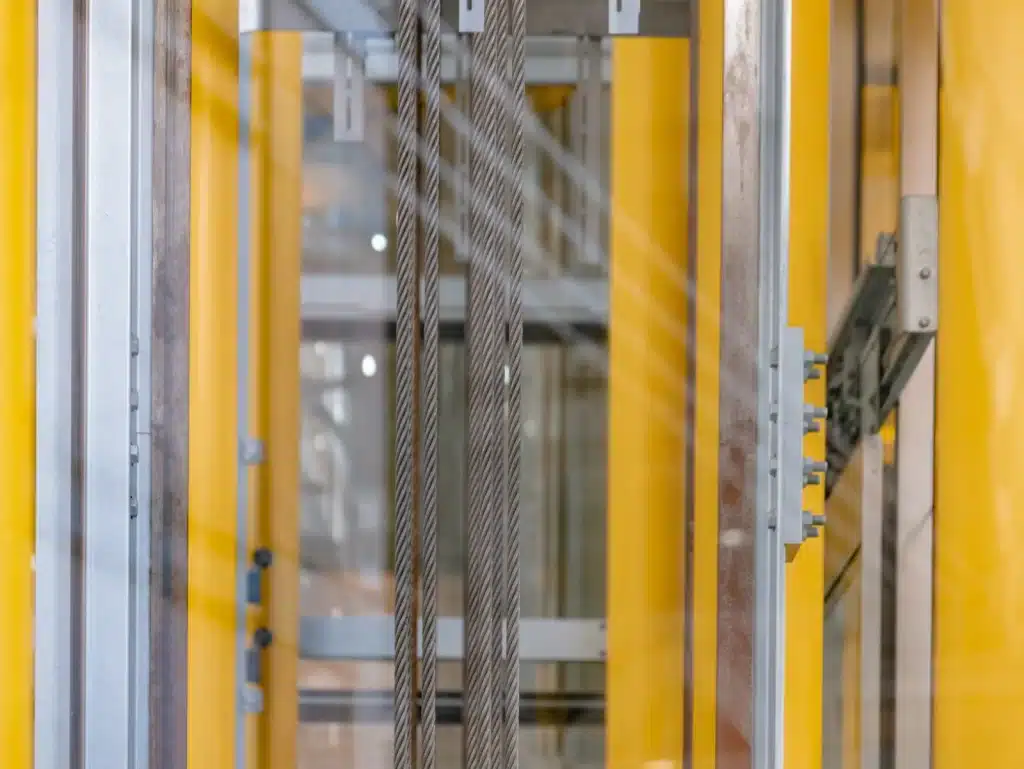
The pulley or sheave is the fundamental mechanism of a traction lift. After years of supporting heavy loads, sheaves wear and develop grooves that cause the ropes to sit unevenly. This produces a bumpy, stuttering ride — both vertically and, in severe cases, with side-to-side movement. Left unaddressed, worn sheaves progress from an uncomfortable ride to a safety issue. Regrooving or replacing sheaves is straightforward if caught early; far more expensive if the ropes are also damaged by the time it is flagged.
Cause 2: Motor Failure
Some older lifts still run on direct current even in buildings wired for AC, which requires motor-generator sets to convert power before the lift operates. The carbon brushes in these systems are wear items — they degrade gradually and generate a distinctive burning smell before they fail. Motor failure is one of the more common reasons our engineers are called to older residential and commercial lifts. A complete motor replacement is expensive; scheduled brush replacement during routine maintenance is not.
Cause 3: Damaged Consoles
The console — the button panel — is one of the most frequent failure points. Overuse, vandalism, and moisture damage are the main culprits. A non-responsive button or a stuck floor call is the usual symptom. In high-traffic buildings with vandal-prone environments, IP54-rated push buttons and robust panel specifications during refurbishment will significantly extend console lifespan.

Cause 4: Poor Lubrication
Proper lubrication is essential for smooth operation. After extended use, metallic particles shed from moving components contaminate the lubricant, degrading its effectiveness. An oil analysis will identify the contamination level and guide the correct replacement oil specification. Buildings that run lubrication as a tick-box item rather than an oil-quality check are the ones we see with premature mechanical wear.
Cause 5: Improper or Neglected Maintenance
Deferring maintenance to save money is the most consistent predictor of a costly emergency callout. Unexpected breakdowns, tenant complaints, and entrapment incidents are the inevitable results of skipped service visits. A reactive repair almost always costs more than the maintenance it replaced. Even newly installed passenger lifts should be inspected every six months.
Cause 6: Age
As lift components age, the probability of failure rises steeply. Older equipment also uses discontinued technology — when a component fails, a replacement may no longer be available, meaning a full component swap rather than a targeted repair. Any lift over 15–20 years old should be assessed for modernisation, not just maintained reactively.
Cause 7: Misuse and Vandalism
Overloading, forced door operation, vandalism, and smoking all cause accelerated wear. CCTV in lift lobbies and clear visible signage reduce the incidence of misuse. Category 2 vandal-resistant specifications — reinforced doors, IP54 push buttons, robust cladding — are worth specifying in buildings with known access control challenges.
Looking for Expert Lift Maintenance?
Lift breakdowns are mostly preventable with regular servicing and early attention to warning signs. Future Lift Services provides comprehensive lift maintenance, repairs, and 24/7 emergency callout across Essex and London. Contact us for a free, no-obligation maintenance consultation., or they may get worried or agitated because of the wait. Stay cool and wait for assistance to arrive; do not attempt to push the lift doors open or climb out in order to prevent possible injury.